Detecting fake documents
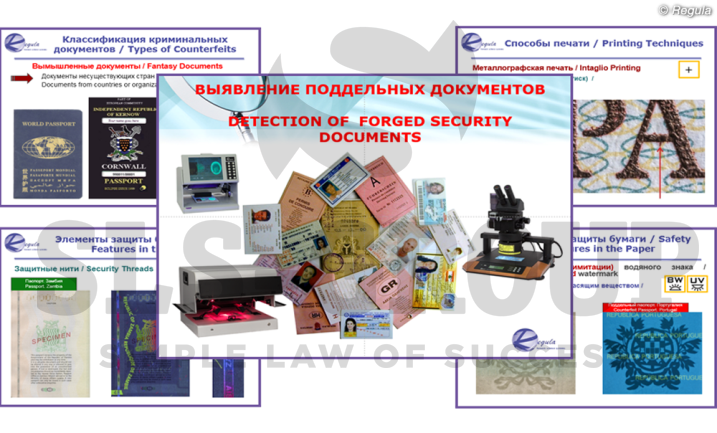
A set of training activities to determine the authenticity of documents: passports and other identification documents, driver’s licenses and vehicle registration certificates, visas - trainings, seminars, conferences, practical classes.
| Course name | Detecting Fake Documents (Basic Training Course) | Detecting fake documents
(Advanced training course) |
| Number of listeners | up to 10 | up to 5 |
| Number of hours | 20 | 40 |
| Target Audience | · law enforcement officers; · employees of consular and migration services; · representatives of transport companies engaged in international transportation of passengers, including representatives of airlines and special airport services; · teaching staff of educational institutions. |
· law enforcement officers; · employees of consular and migration services; · representatives of transport companies engaged in international transportation of passengers, including representatives of airlines and special airport services; · teaching staff of educational institutions. |
| Learning Objective | · acquiring theoretical knowledge about the basics of producing secure documents; · familiarization with methods for determining the authenticity of protected documents; · obtaining practical skills in identifying counterfeit documents and effectively using technical means of authentication control. |
· acquisition of theoretical knowledge about the technology of production of secure documents; · mastery of methods for determining the authenticity of protected documents; · familiarization with new security measures used in documents; · improving practical skills in identifying counterfeit documents and effectively using technical means of authenticity control. |
| Training program | · document paper production technology, its main security elements; · types of printing of documents; · basic printing tools and elements for protecting documents from forgery; · ways to protect the photograph of the document owner; · types of protective (laminating) films used in documents; · classification and types of counterfeit documents; · technical means and types of light sources used to check documents; · practical use of technical means of authentication control to identify counterfeit documents. |
· technology for the production of document paper, its security elements; · printing inks used in documents; · types and methods of printing documents; · printing tools and elements for protecting documents from forgery; · composition of the book block of the document; · ways to protect the photograph of the document owner; · types of protective (laminating) films used in documents; · ways to personalize documents, features and differences; · classification and types of counterfeit documents; · modern methods of document forgery; · technical means and types of light sources used to verify originality; · practical use of technology. reliability control tools to detect counterfeit documents. |
The use of complex systems to protect papers from counterfeiting and the high-tech production of such printed products require knowledge in this field from specialists checking authenticity. An equally important role in ensuring the quality of inspection is played by the correct use of technical inspection equipment.
For a systematic approach in the main areas, business strategies were developed, aimed, in addition to creating a modern instrument base, at specialized training of specialists whose responsibilities include verifying the authenticity of banknotes.
Project “Specialized training. Detection of counterfeit documents" is developed on the basis of its own information and technical resources (http://www.regulaforensics.com), summarizes the information resources of many international conferences in the field of production of security printed products, while taking into account the recommendations of international legislation on inspection issues.
Today, as part of the project, the company has developed two training programs designed for audiences with different levels of preparedness. At the request of the training party, the content of training programs can be revised or supplemented.
The teaching staff has a lot of practical experience in expert departments and experience teaching on this complex topic. To ensure the effectiveness and high quality of the educational process, video materials and illustrations are used both on paper and in electronic form.
Delivery methods: delivery to the address, delivery by transport companies. We deliver throughout Russia. Delivery prices are calculated by sales managers. Delivery times are calculated depending on the equipment supplied and the conditions specified in the contract. Payment methods: We accept non-cash payments including VAT.